
Language IS the culture, si?
Bad Bunny's Super Bowl show helped prove it.

My long-deceased father was a lawyer, journalist and teacher who loved the study of foreign languages. He loved them enough that family lore says he could speak and write seven languages. Before he passed away at 46, he was learning Arabic most evenings, something I remember, even though I was just 9-years-old when he died suddenly.
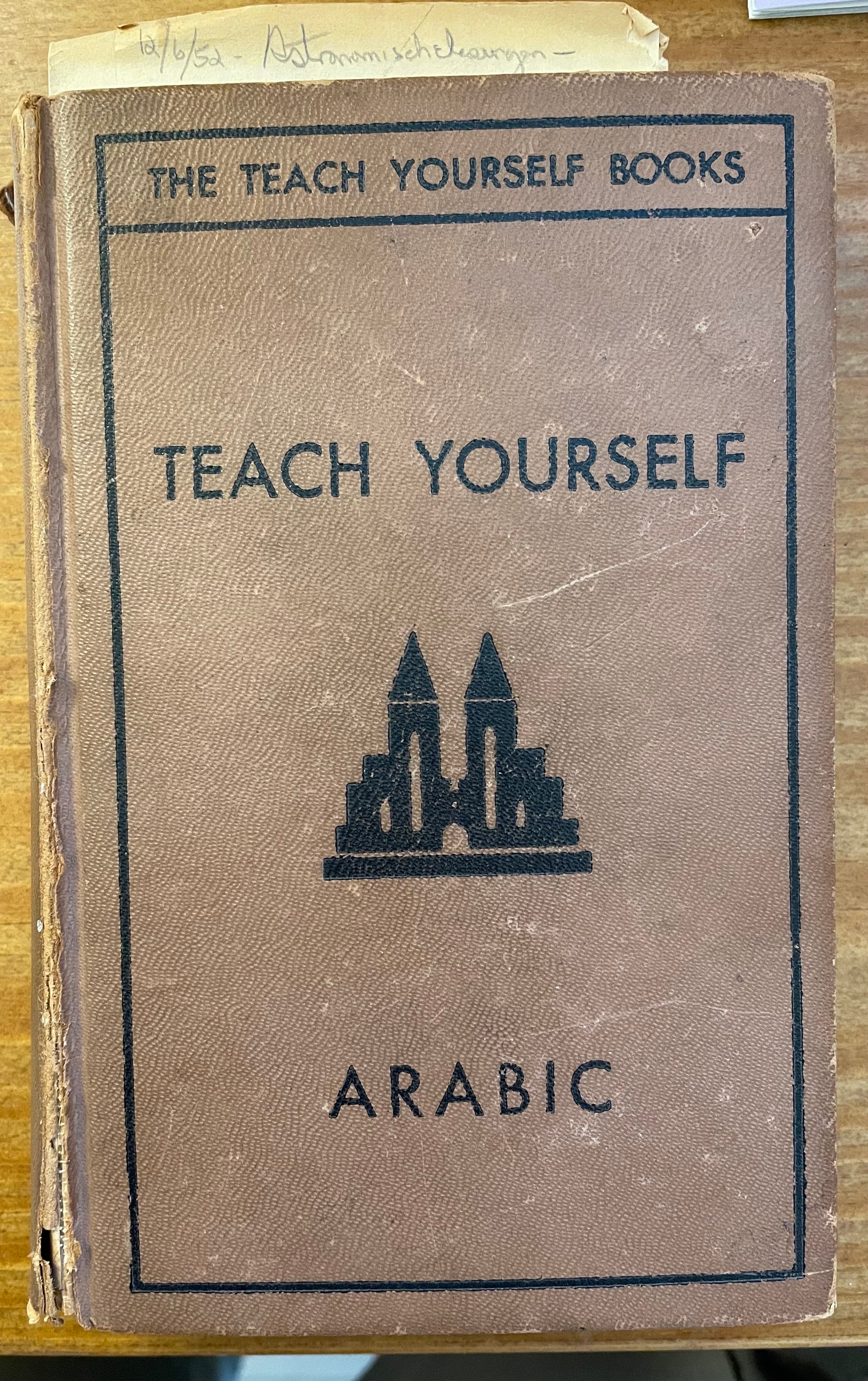
I still have his learn-Arabic book on my bookshelf, filled with his annotations and notes.
In my high school years, my struggles with learning French convinced me I was a foreign-language idiot. Four years of French classes were academic torture. Granted, I didn’t study as I much as should have. But even with a tutors coaching me weekly, mon français était pitoyable.
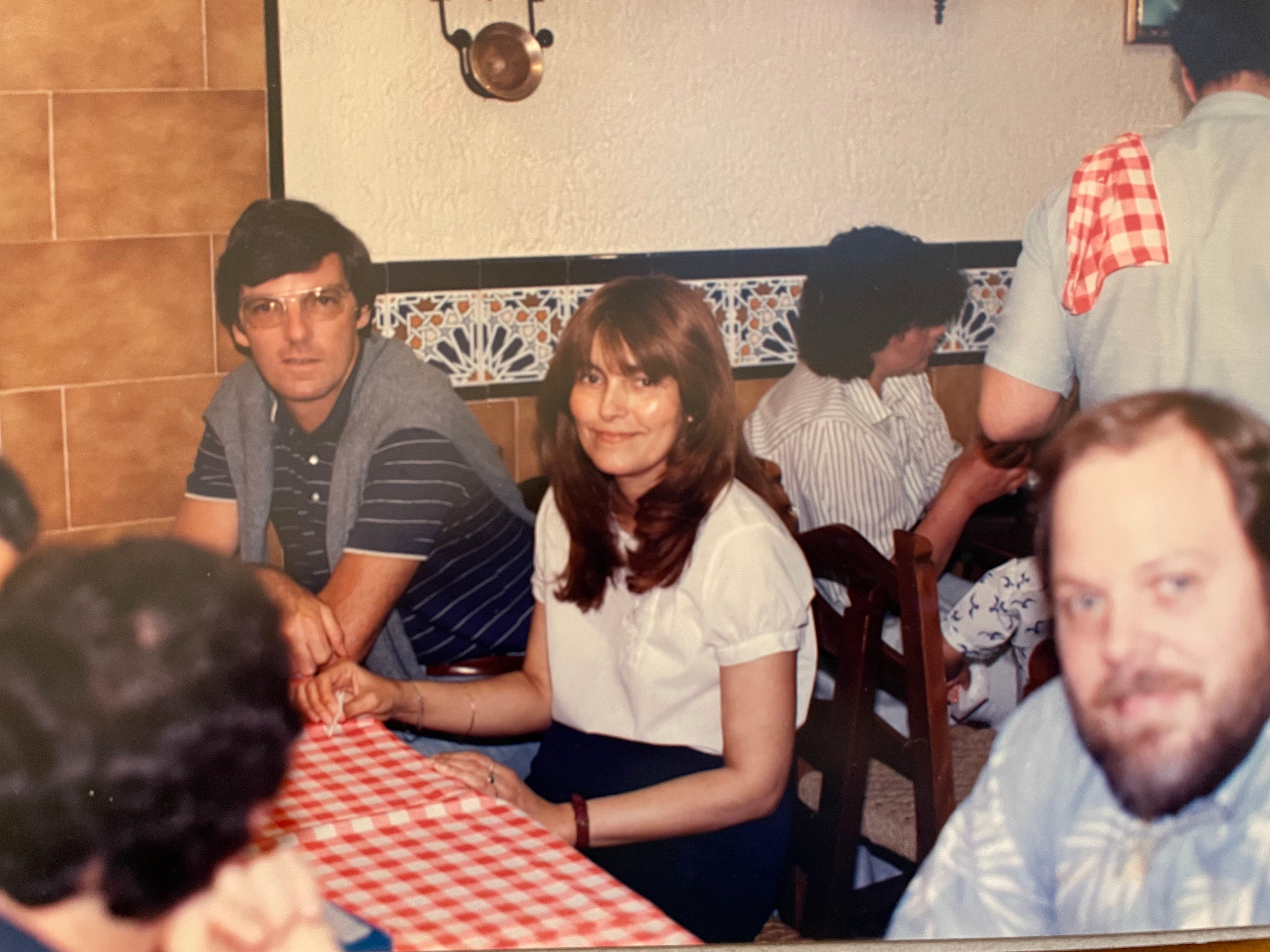
Fast forward to the mid-1980s when the dean of the college at California State University, Chico where I was teaching called me in with a few other professors to offer us a chance to go to Spain. We would give lectures at four universities about our teaching specialities. Mine was student press. We also had a public radio expert, a photo specialist, an international press guy and two very high-tech computer types. Plus our bilingual dean was a mover and shaker in communications’ academia.
He had gotten the whole trip funded with federal Fulbright money. We did not have to pay a cent for air fare, hotels, food, travel - you name it. And we would leave in eight weeks, right after graduation for a month-long gig in Spain with two weeks at the end for individual travel to other parts of Europe.
But there was one catch. We had to give our lectures in Spanish to 100-200 people in auditoriums at the universities. The vast majority of the students and faculty in the audiences were not English speakers.
Pardon my Irish, but Holy Shiite!!!!!!
Still, a free trip to Europe? I took the bait and the race was on.
My daughter, then a young teenager, helped by drilling me with flash cards, one side in English, one in Spanish. (I still have the shoebox full of them.) I audited elementary Spanish classes at my university. Our dean hired a tutor to drill us several-times-a-week in group lessons. In all that, this language idiot learned enough to read a prepared talk aloud. And I could make simple conversation in small groups. Spanish wine helped loosen my tongue in the evenings. At least that’s what my interpreter in Murcia told me.
Most important, I realized if I had incentive enough, by God I could learn a foreign language. And it was fun. A decade later I started traveling to Mexico on sailboats with friends. My wife and I eventually bought property in a tiny coastal village. But the real language kicker came when my wife and I joined friends on their canal boat cruising the Canal du Midi in the south of France. I studied French via some books I had in my home library before the trip. And - VOILA! - lessons from those years of high school French came back in a rush when we landed in Toulouse. Mon Dieu! It was amazing.
All that history was rolling around in my mind when I wrote my column for the Finger Lakes Times last week, prompted by Bad Bunny’s amazing Super Bowl 60 halftime show and the blowback from some folks who complained about not understanding what he was saying. Well, I speak almost passable Spanish. But I couldn’t understand a lot of his rapid fire singing and talking in Spanish. You really didn’t need to to get his messages.
I think the full column from February 13, 2026 below explains that better:
===========================================
A few words about language, si?
By Michael J. Fitzgerald, columnist
Finger Lakes Times, Geneva NY
Some years ago actor Edward James Olmos asked a group of students and faculty at the California state university campus where I was teaching if they knew what to call a person who could speak three languages.
“Trilingual,” several people shouted.
When asked what to call people who spoke two languages, the reply was quick. “Bilingual!”
And those who spoke only one language?
Olmos answered himself: “American.”
True dat.
Super Bowl 60’s half-time show was a joyful extravaganza, intricately choreographed in a music-and-dance-filled collage. And it was all in Spanish.
International star Bad Bunny – an American born and raised in the territory of Puerto Rico – used his stardom and his appeal to a Latino audience to tell a story of the history of the people of Puerto Rico and the Americas. And his show was very much a paean to his Puerto Rican roots.
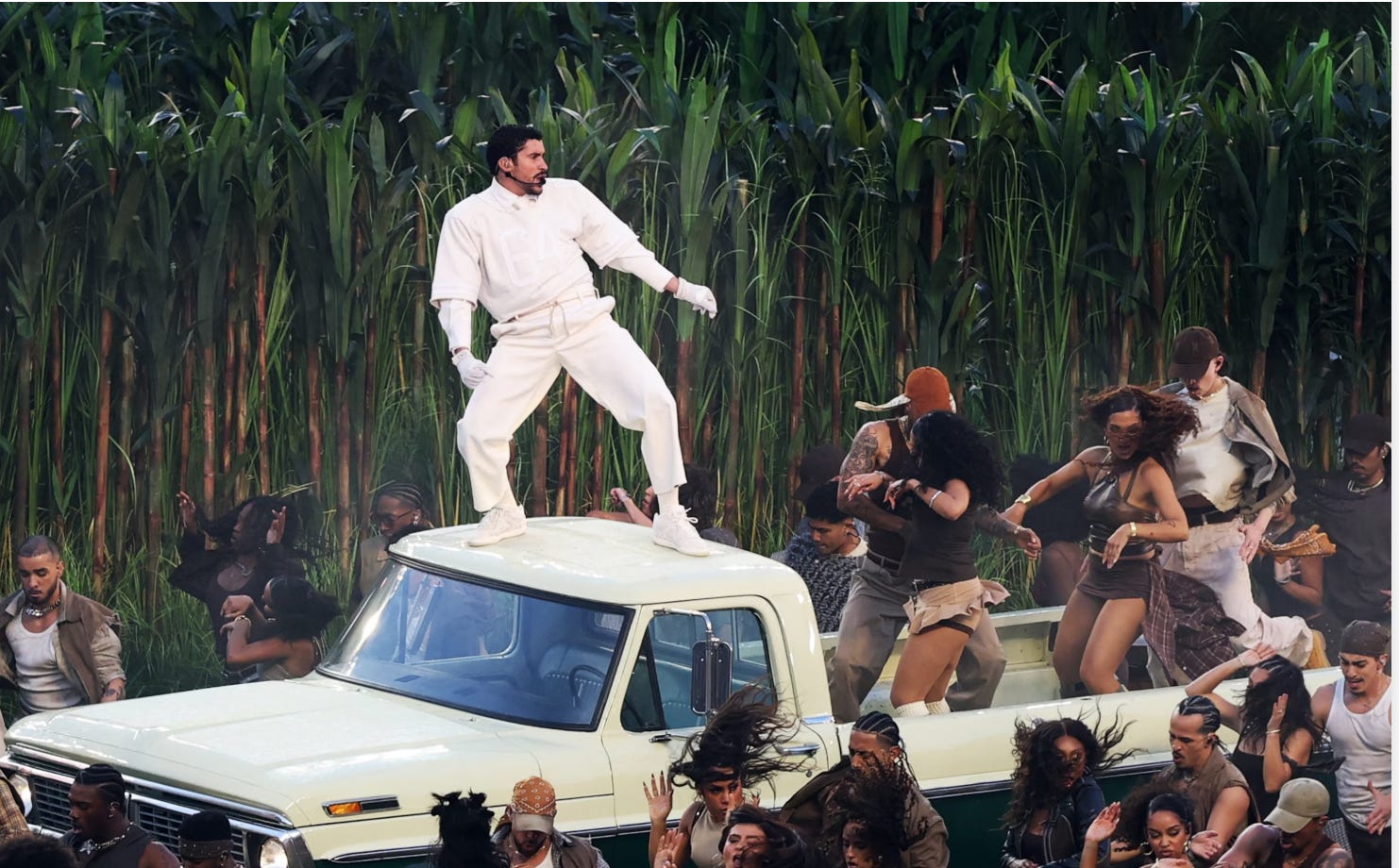
A handful of critics noted that because the program was almost completely in Español, a lot of the audience no comprenden. Given the rapid pace of Bad Bunny’s speaking and singing I would wager even skilled Spanish speakers had some trouble keeping up.
But no matter how rapid Bad Bunny’s patter was, the 13-plus minutes of the performance was an immense, fast-moving pageant that showed sugar cane workers, life in the villages, the catastrophe of a hurricane and the collapse of its power grid. And it revealed love for his country.
Many who commented on the performance said while they don’t under Spanish, the images told the story. The half-time show declared, among other things, that people in the varied nations across North and South America are a two-continent collective. And Spanish knits many of the people.
Unlike many nations, Americans generally are not big on being able to speak any other language other than their native English. Choosing Bad Bunny to put on the half-time show at the Super Bowl is a reflection of a changing language landscape. In states bordering America’s west coastline, Spanish is commonly spoken amid the majority of English speakers. Ditto for Texas and Arizona. Bilingual programs in elementary schools are increasingly popular, too, all over the country. And not just in Spanish.
Foreign language study was required in New York State when I went in high school in the 60s. I took a state Regents Exam in French, barely scraping by with a passing score. It was a pretty sad performance for the son of a man who could speak and write seven languages. My Dad had passed away years before I went to high school or he might have tutored me in Francais for a better showing.
But decades after that French exam debacle, I learned Spanish sufficiently to join a group of university professors heading to Spain to teach in a media program. I discovered two things in that process. First, if I had the right incentive, I could learn a foreign language, quickly. Second, if you want to truly understand a culture, being able to speak and understand its language is critical.
That second part was clear during my Spain adventures and later when I lived in a tiny Mexican coastal village where my wife and I were the only English speakers among 300 residents.
The tutor that got me and my colleagues up to speed in Spanish for our Spain journey once told us flatly that “language is the culture.”
I think Bad Bunny and the other performers gave us a lesson in that last Sunday.
Si?
Fitzgerald has worked at six newspapers as a writer and editor as well as a correspondent for two news services. He splits his time between Valois, N.Y., and the Pacific Northwest. You can email him at Michael.Fitzgeraldfltcolumnist@gmail.com and visit his websites at michaeljfitzgerald.blogspot.com and michaeljfitzgerald.substack.com.
One of my "retirement goals" is to learn (relearn) another language. French was junior high, long forgotten; Spanish was high school, and I can be forgiven for not remembering a lot because Laurette Spang sat directly in front of me (she of "Battlestar Galactica" fame). My next-door neighbor is German, so that's one, and probably Spanish, because of everything you mentioned.
Yes, it’s embarrassing to be a monolingual American traveling the world. (I love that quote in this piece). People apologize if they don’t speak very good English, and I say no, I’m sorry for not knowing theirs! We are making it a priority to take Japanese classes when we get back home, to learn our daughter-in-law’s first language and be able to communicate with her parents. I’d like to get back into Spanish too, to build on my two years in high school.